
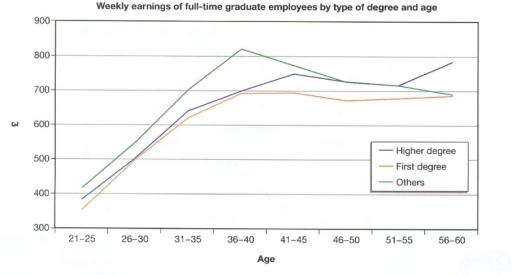
The graph demonstrates the weekly earnings of
full time
graduate employees by type of Correct your spelling
full-time
degree
and Use synonyms
age
in 2002.
The Use synonyms
first
key feature shows that Use synonyms
Use synonyms
first
Correct your spelling
first-degree
degree
workers had the lowest weekly Use synonyms
earrings
Check wording
earnings
overall
for the whole period. Linking Words
Therefore
, the earrings of almost 700 remained stable for the 38-40 Linking Words
aproximate
Correct your spelling
approximate
age
group. After a slight decrease, the amount Use synonyms
stabilized
partly Change the spelling
stabilised
to
the previous position, for the 56-60 Change preposition
at
age
groups.
Use synonyms
On the other hand
, the proportion of paychecks for individuals with other qualifications showed the sharpest increase throughout the period, reaching over the amount of 800 by 37-38 year olds. Linking Words
However
, numbers decreased steeply to under 700 in the later stage of life. Opposing Linking Words
to
the Change preposition
apply
first
two categories mentioned, Use synonyms
post graduates
were the only group to experience an increase in earnings from the Correct your spelling
post-graduates
age
of 52, from a little over 700, to almost 800 by 56-60 year olds.
Use synonyms
Overall
, people with different credentials reached the highest income at a younger Linking Words
age
, but suffered a decrease, reaching the same point as the Use synonyms
first
Use synonyms
degree
population as they grew older. Use synonyms
Nonetheless
, from that point, higher Linking Words
degree
persons had a rise in earnings.Use synonyms