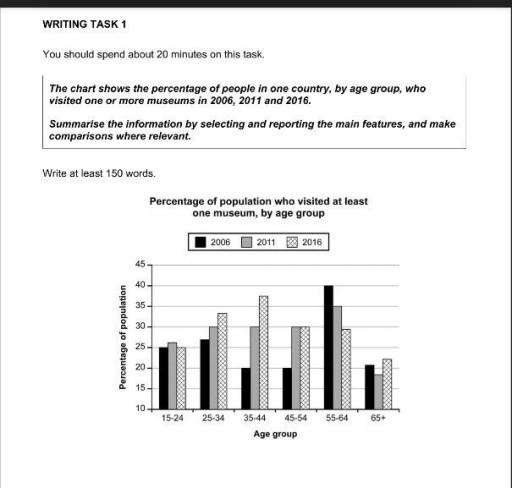
The chart shows the percentage of people in one country, by age group, who visited one or more museums in 2006, 2011 and 2016. Summarise the information by selecting and reporting the main features, and make comparisons where relevant.
IELTS Writing Task Chart for The chart shows the percentage of people in one country, by age group, who visited one or more museums in 2006, 2011 and 2016. Summarise the information by selecting and reporting the main features, and make comparisons where relevant.
, the younger age groups had more museum visits in 2016, and the older age group in 2006. Ages 45-55 visits to the museum remained the same in 2011 and 2016.
In 2006, the younger
aged
Replace the word
age
show examples
group had about 25%
hafsatkay2
Unauthorized use and/or duplication of this material without express and written permission from this site's author and/or owner is strictly prohibited. Excerpts and links may be used, provided that full and clear credit is given to Writing9 with appropriate and specific direction to the original content.
Sentences: Add more complex sentences.
▼
Linking words: Add more linking words.
▼
Common mistake: Your writing should be 150-250 words.
Vocabulary: Only 5 basic words for charts were used.
Some people believe that personal happiness is closely tied to economic success, while others argue that it depends on very different factors. This essay discusses both views and presents my opinion.
In today’s society, unhealthy cooking and sugary drinks have become more popular and widely available than ever before. Some believe that the government should place higher taxes on these products to promote better eating habits. I completely agree with this idea because it can reduce overconsumption and help fund public health efforts.
Some would argue that people have the right to share any content they like, while others think that there has to be some control over social media content. Although sharing any content is beneficial for creativity and the sense of freedom, I strongly believe that having some restrictions would help people feel safer.
In our contemporary society, some people advocate that the soaring use of technological devices in education is having a negative impact on students' learning abilities. On the other hand, others argue that using technology in classes is significant because these tools enhance learning skills. In the impending paragraphs, this essay will elucidate my opinion on this topic and discuss the pros and cons of this phenomenon.
Most cities provide several kinds of recreational public places such as zoos, museums, or parks for their citizens to support their quality of life. However, there are different opinions about how to manage it. A group of people thinks that citizens should be charged to entry. Others, including me, believe it should be accessed freely without any additional charges.